
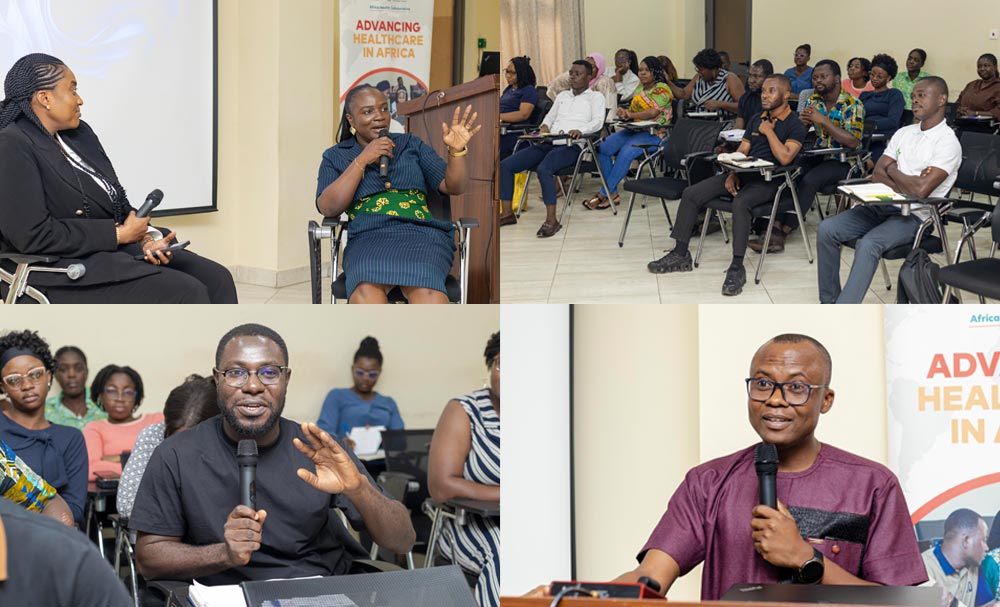
The Africa Health Collaborative (AHC) at the Kwame Nkrumah University of Science and Technology, Kumasi (KNUST) in partnership with the Mastercard Foundation, has organised a workshop to equip Cohort III students of the MSc Health Entrepreneurship programme with practical skills in family business management, succession planning and conflict resolution.
The workshop formed part of the programme's commitment to preparing emerging health entrepreneurs to build resilient and sustainable enterprises capable of thriving beyond their founders.

Speaking at the workshop, Ms. Mary Asante Asamoah, Founder of Family Business Hub, introduced participants to the fundamentals of family businesses through a session titled Family Business 101, which explored the dynamics, opportunities and challenges associated with family-owned enterprises.
She highlighted the key elements required to build successful family businesses, including effective governance structures, succession planning, leadership transitions and balancing family relationships with business responsibilities.
"We explored the importance, positives, negatives and challenges of family businesses, and discussed practical models for building successful enterprises," she said.
Ms. Asamoah noted that participants also benefited from Family Business Diaries, during which second-generation business leaders shared real-life experiences on governance, board leadership, innovation, succession and conflict management.
"We talked about succession, governance, balancing family and business, and knowing when to be a child and when to be a leader. Some of the students come from family businesses, while others are establishing their own ventures. They have now been exposed to practical blueprints that can guide them in building sustainable businesses," she added.

Dr. Gifty Quarshie-Ngissah, Medical Director of Midway Hospital and a second-generation leader of the 45-year-old private health facility, shared her experience of transitioning leadership from the founder to the next generation.
She encouraged the students to begin planning for the long-term sustainability of their businesses from the outset.
"I hope this session opens their minds to think about longevity for their businesses. Too many African businesses collapse when the founder exits. Through succession planning and deliberate leadership development, we can build enterprises that outlive their founders and contribute meaningfully to Africa's economic growth," she said.

Dr. Richard Obeng Mensah, Esq., a lecturer at the KNUST School of Law, focused his presentation on managing conflicts within family businesses.
He said family businesses account for approximately 80% of businesses in Ghana, but only about 30% survive into the second generation, with just 10% reaching the third generation.
According to him, unresolved conflicts remain one of the major reasons many family businesses fail to survive across generations.
"Conflict is inevitable in every business. The issue is not whether conflict will arise, but how it is managed," he said.
Dr. Obeng Mensah urged participants to prioritise alternative dispute resolution mechanisms, including negotiation, mediation and arbitration, before resorting to litigation.
"Litigation should always be the last option. Business owners should first seek amicable solutions through negotiation and mediation to preserve relationships and ensure business continuity," he advised.
He expressed confidence that the knowledge gained from the workshop would enable the young entrepreneurs to anticipate potential conflicts and adopt appropriate strategies to resolve them as they build and scale their businesses.
Story and Photos: Emmanuel Offei


